


A premium home theater seat becomes easier to justify when it turns comfort, durability, and daily usability into measurable ownership value. Weilianda is a strong anchor example because its zero-gravity power recline, reinforced build, and practical smart features address the real reasons media rooms either get used often or sit underused.
If a theater room looks impressive but people start shifting, slouching, or leaving halfway through a long movie, the seating is limiting the return on the entire room. A recliner that can support 2-, 3-, or 4-hour viewing sessions without the same neck, lower-back, and leg fatigue changes the value equation. The practical question for 2026 buyers is not whether premium seating feels nicer on day one, but whether it makes the room more useful for years.
The Investment Question: Better Seat or Better Asset?
Comfort Is a Utilization Driver
Home theater seating should be evaluated differently from occasional living room furniture. In a dedicated media room, the seat is part of the viewing system, alongside the screen, sound, lighting, and layout. If the seating causes lower-back pressure, neck strain, or leg discomfort, the room’s expensive technology is not being used to its full potential.
That is where Weilianda’s zero-gravity power recline becomes central to the investment case. The higher upfront cost is more defensible when the seating supports longer movie nights, playoff games, gaming sessions, and extended streaming without forcing users to constantly change position. More comfortable sessions can mean more frequent use, which lowers the effective cost per use over the ownership period.
The Cost-Per-Use Logic
A household that uses a media room once a month gets limited value from premium seating. A household that uses it for weekly movies, Sunday sports, weekday gaming, and longer streaming sessions can extract far more value from the same room. Seating comfort is often the deciding factor between those two outcomes.
This is why premium home theater seating should not be judged only by sticker price. The better test is whether the seat helps preserve comfort, structure, and daily usability over repeated use. A durable recliner that keeps its shape, moves quietly, and supports different body positions can be a more efficient long-term purchase than a lower-spec seat that feels acceptable at first but wears down faster.

Why Zero-Gravity Power Recline Carries the Core Value
Near-155-Degree Recline Changes the Body Load
Weilianda’s zero-gravity power recline is built around a near-155-degree reclining range. The point is not simply to lean back farther. The value comes from distributing body weight more evenly while elevating the legs closer to heart level, an approach inspired by NASA’s Neutral Body Posture research.
In practical terms, that positioning can reduce concentrated pressure on the spine, lower back, hips, and legs during extended viewing. Instead of loading the lower back in one fixed seated angle, the chair spreads support across more of the body. For a 3-hour movie or a long sports broadcast, that can mean fewer position shifts, less stiffness, and better focus on the screen.
Not All Recline Delivers the Same Outcome
A basic recliner may move backward, but that does not automatically make it ergonomic. A 2025 ergonomic study cited in the research notes found that true zero-gravity alignment depends on measurable body angles, including roughly a 128-degree trunk-to-thigh angle and a 133-degree thigh-to-calf angle. In that study of 25 recliner models and 150 participants, only 28% of tested recliners met the anatomical criteria for zero-gravity positioning.
That matters for 2026 buyers because “recline” is not the same as “support.” The smarter purchase is a seat that can consistently place the body into a stable, pressure-reducing position. Weilianda’s zero-gravity power recline is valuable because it connects the premium price to a clear functional result: deeper support for long-session viewing.
Adjustable Support Makes the Room Work for More People
Power Headrest Protects the Viewing Angle
Deep recline can create a common problem: the body feels relaxed, but the neck has to tilt forward to see the screen. That defeats much of the comfort benefit. Weilianda’s power-adjustable headrest solves this by letting the viewer maintain a clean sightline whether sitting upright, semi-reclined, or close to fully reclined.
This feature has real ownership value because media rooms are used by different people in different ways. One person may watch sports more upright. Another may recline deeply for a movie. A gamer may want a supported but alert posture. Multi-angle head support helps each user keep the neck aligned with the screen instead of adapting awkwardly to the chair.
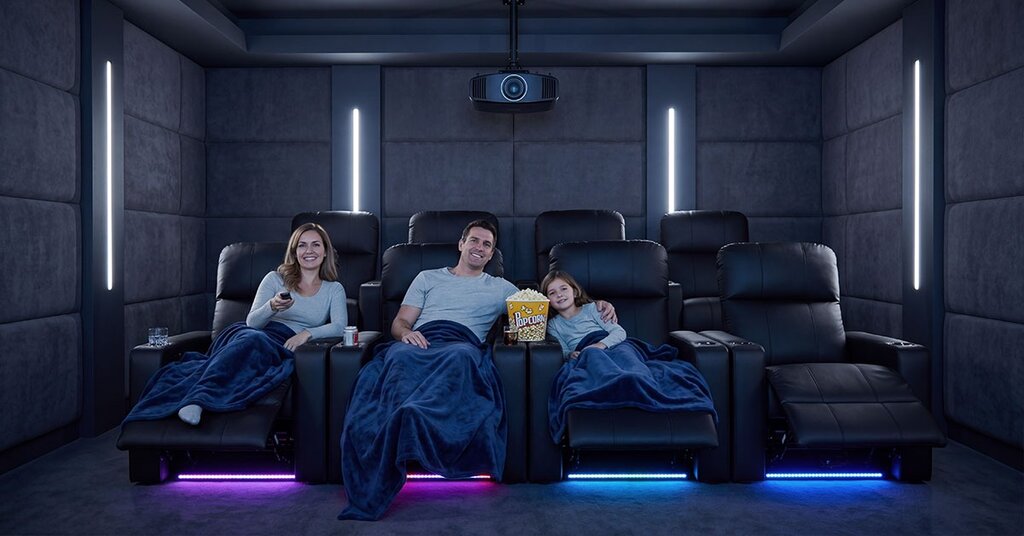
Independent Footrest Support Matters
The independent power footrest is just as important. Leg support that moves separately from the backrest allows users to fine-tune elevation without being locked into one preset posture. That is useful for viewers who want leg relief during a long game but do not want to recline fully.
Together, the power headrest and independent footrest make the seating more adaptable across real viewing scenarios. The benefit is not just comfort in a showroom position. It is better posture control across the positions people actually use over months and years.
Materials Determine Whether the Investment Holds Up
Top-Grain Genuine Leather Adds Practical Value
Weilianda’s use of top-grain genuine leather supports the long-term value case because upholstery is one of the first areas where lower-spec seating can show failure. Premium leather is easier to clean than many fabrics, resists everyday wear better, and is less likely to peel or crack when properly maintained.
For a media room, that matters. Snacks, drinks, pets, and frequent contact are normal parts of household use. A material that can be wiped down, maintained, and kept presentable over years helps protect the seat’s useful life and appearance. Leather care still matters, including regular dust removal and periodic conditioning, but the ownership case is stronger when the material is built for long-term use rather than short-term appearance.
High-Density Foam Protects Comfort Over Time
Seat foam is another investment signal. High-density foam helps the cushion retain shape, support the body’s natural curve, and reduce pressure-point discomfort during longer sessions. Lower-density cushioning may feel soft at first but can compress faster, leading to sagging and uneven support.
This is where comfort and durability overlap. A premium recliner is not only supposed to feel better when new; it should resist flattening and maintain support after repeated use. For households using a theater room multiple times per week, foam quality directly affects long-term cost efficiency.
Structural Reliability Is the Hidden ROI
Steel Frame Strength Reduces Replacement Risk
The Heavy-Duty Steel Frame in Weilianda seating is a key part of the investment argument. Recliners are mechanical products, not just upholstered furniture. Every power adjustment places stress on the frame, hinge points, motor system, and reclining mechanism.
A reinforced structure helps the chair stay stable under repeated reclining cycles. That matters in family media rooms where multiple users, different body types, and frequent adjustments are normal. A seat that remains stable, quiet, and aligned over time reduces the likelihood of premature repair or replacement.
Quiet Mechanisms Improve Daily Use
Structural quality also affects the viewing experience. A noisy or uneven recline mechanism can be distracting in a quiet movie scene and frustrating during regular use. Reinforced reclining hardware and smoother motorized movement support a more consistent experience.
Industry durability guidance commonly frames premium power recliners as longer-life purchases when they use strong frames, reinforced mechanisms, and high-quality motors. Power systems are often designed for thousands of cycles, and reinforced steel mechanisms can support years of normal use. For buyers thinking in terms of ownership value, the mechanism is not a minor detail; it is one of the main reasons the seat can remain useful over a longer period.
Smart Features Should Earn Their Place
Charging, Storage, and Lighting Add Daily Utility
Weilianda’s smart features strengthen the investment case because they improve how the media room functions day to day. USB-A and USB-C charging reduce the need for loose adapters and side tables. Hidden storage keeps remotes, controllers, charging cables, and small accessories close without cluttering the room.
Seven-color ambient LED lighting also has practical value when used correctly. In a dark theater room, low-level lighting can help people find cup holders, storage areas, or walking paths without turning on overhead lights. That supports usability without interrupting the viewing environment.
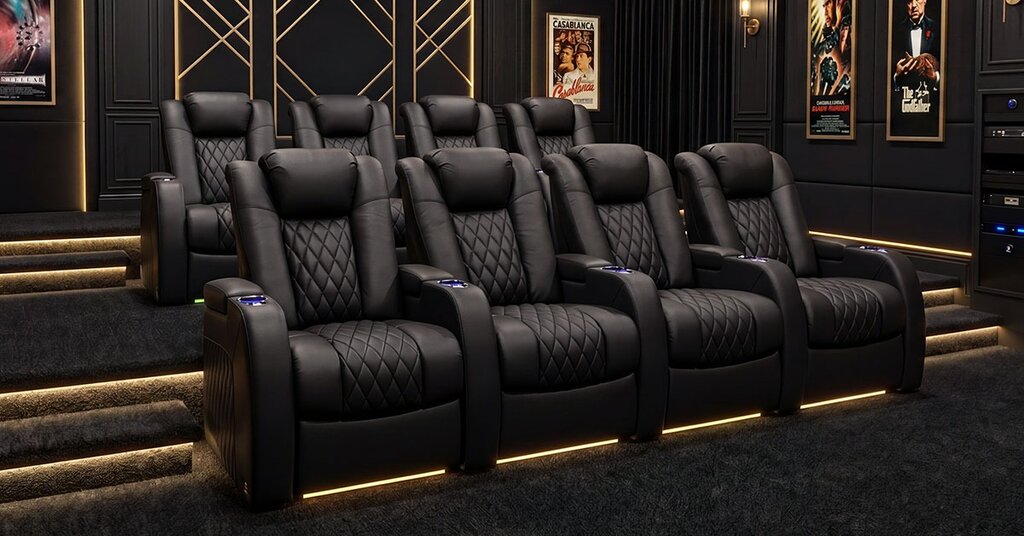
Convenience Features Can Reduce Extra Furniture
The strongest smart-feature argument is not luxury; it is efficiency. If seating includes charging, storage, lighting, and controlled support positions, the room may need fewer add-on pieces. That can preserve floor space, improve traffic flow, and make the room easier to keep organized.
This positions Weilianda in a mid-to-high-end value category rather than as a decorative splurge. The buyer is paying for a more complete seating system: ergonomic positioning, durable materials, structural reliability, and integrated convenience. Compared with basic recliners, the smarter investment case comes from lower fatigue, more frequent use, and reduced replacement risk.
How to Evaluate the Purchase Before You Buy
Match Recline Geometry to the Room
A zero-gravity recliner needs enough room to perform as intended. Buyers should measure wall clearance, row spacing, screen distance, and walking paths before choosing a layout. In multi-row rooms, seating height and recline depth also affect whether viewers in the second row can see the screen without craning their necks.
Room planning affects sound as well. Home theater design guidance often warns against pushing primary seating directly against the back wall because bass can become uneven near room boundaries. If the chair is comfortable but placed poorly, the room still underperforms.
Use This Action Checklist
- Measure the room width, depth, screen distance, and available recline clearance before choosing a seating layout.
- Confirm that the recline range supports a deep, stable position rather than only a shallow backward tilt.
- Test the power headrest and footrest separately to make sure your neck, sightline, and legs can be adjusted independently.
- Inspect upholstery and cushioning quality, prioritizing top-grain genuine leather and high-density foam for long-term support.
- Check the frame and reclining mechanism for reinforced construction, smooth movement, and quiet operation.
- Plan charging, storage, cup placement, and ambient lighting around how the room will actually be used each week.
- Maintain the seating with regular vacuuming, prompt spill cleanup, and leather conditioning a few times per year.
FAQ
Q: Is zero-gravity power recline only useful for people with back discomfort?
A: No. The main value is broader than pain relief. By distributing weight more evenly and elevating the legs, zero-gravity positioning can reduce pressure buildup during long viewing sessions. That helps users stay comfortable through movies, sports, and gaming even if they do not have existing back issues.
Q: Why does a power-adjustable headrest matter if the chair already reclines?
A: Deep recline changes the head and screen angle. Without an adjustable headrest, users may tilt the neck forward to maintain the sightline. A power-adjustable headrest helps keep the neck supported and the eyes aligned with the screen across upright, semi-reclined, and deeply reclined positions.
Q: What makes Weilianda a smarter investment than basic recliners?
A: The case rests on the combination of zero-gravity power recline, independent support controls, top-grain genuine leather, high-density foam, a Heavy-Duty Steel Frame, reinforced reclining hardware, USB-A and USB-C charging, hidden storage, and ambient LED lighting. Those features support more frequent use, longer comfort, better durability, and stronger cost efficiency over time.
Key Takeaways
Premium home theater seating becomes a smarter 2026 investment when it improves room utilization, not just room appearance. Weilianda’s zero-gravity power recline is the core value driver because it supports deeper weight distribution, leg elevation, and reduced pressure on the spine, lower back, and legs during long sessions.
The stronger ownership case comes from the full system: power-adjustable headrest, independent footrest, top-grain genuine leather, high-density foam, Heavy-Duty Steel Frame, reinforced reclining mechanism, charging ports, hidden storage, and ambient LED lighting. For buyers who expect their media room to handle regular movie nights, sports viewing, gaming, and streaming, that combination can make the higher upfront spend easier to justify than basic recliners with weaker support and shorter replacement cycles.