

Stablecoins were created to solve one of crypto’s biggest issues: volatility.
They gave people a way to hold digital value that tracks a reference currency more closely than assets like BTC or ETH. That made them more practical for storing value, sending funds, and moving money across blockchain networks.
But that didn’t automatically make them easy to spend in real life.
That’s where the gap still exists.
You might hold stablecoins in a wallet and move them easily onchain – but paying for something in everyday situations is a different story. Real-world spending depends on whether those balances connect to tools people already use, like cards, mobile wallets, and merchant networks.
Until that connection feels routine, stablecoins remain easier to hold than to spend.
Where the Gap Shows Up
You really notice the gap at checkout.
Onchain transfers can feel fast and simple. But when you try to make a normal purchase, things change. Now it depends on:
- Card acceptance
- Supported regions
- Funding setup
- How currency conversion is handled
So even if your balance is stable, the experience can still feel more complicated than a regular card payment.
That’s why stablecoins alone aren’t enough.
They solve part of the problem – but the payment layer is what makes them usable. If you still have to think through setup or payment steps every time, it doesn’t feel like everyday finance.
The real question isn’t just “does digital money exist?”
It’s “can you use it easily when you actually need to pay?”
Why the Payment Layer Matters
The missing piece sits between your wallet and the checkout screen.
That’s the layer that turns a digital balance into an actual payment.
A product starts to feel practical when supported balances connect to payment rails in a way that feels familiar. Not new. Not complicated. Just something you already understand.
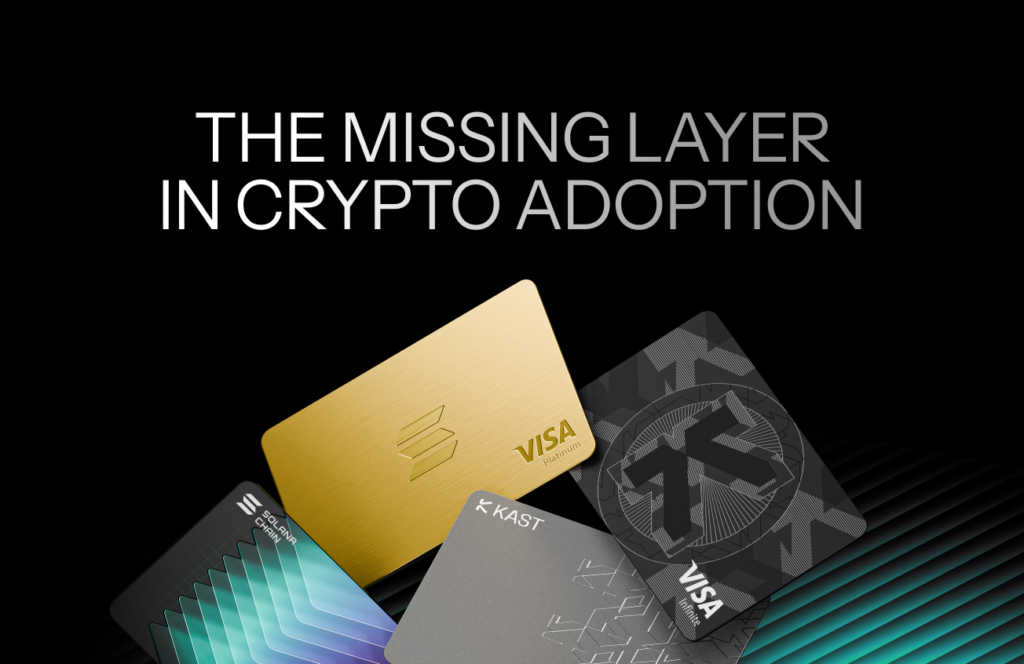
This is where products like KAST come in.
KAST says its cards can be used anywhere the card network is accepted – across 150 million merchants in 170+ countries. It also says users can pay in dollars or use supported currency conversion at checkout.
On top of that, users can add a virtual card to Apple Pay or Google Pay after completing KYC and setup, which brings the experience closer to how people already pay day to day.
That doesn’t mean everything becomes frictionless.
KAST’s own materials make it clear that:
- KYC is required before deposits or withdrawals
- Usage can depend on supported regions, merchant acceptance, and local restrictions
So the more accurate point is this:
It’s not about removing every limitation – it’s about making supported balances easier to use once everything is set up.
What This Means for Adoption
This final step is what really drives adoption.
Crypto doesn’t become part of daily life just because people can hold stable value. It happens when that value becomes easy to use at normal points of payment.
And that shift isn’t just technical – it’s behavioral.
People rely on a payment method when it feels:
- Clear
- Familiar
- Consistent
That’s when it becomes part of everyday spending.
Stablecoins created the foundation.
The next step is making them usable in real payment situations.
Products like KAST support that direction by connecting supported stablecoin balances to card-based payments and mobile wallets – while still working within setup requirements and regional limits.
Why This Shift Matters
The missing layer in crypto adoption isn’t stable value.
It’s usable payment access.
When digital balances become easier to spend through familiar tools, the gap between holding money and using money starts to close.
And that’s the shift that matters most.
Want to see how stablecoins can fit into everyday spending?
Explore KAST and how it can be used to pay more naturally using supported digital balances.