

Impact investing continues to evolve rapidly as new opportunities emerge across sectors from renewable energy infrastructure to community development finance. Industry leaders share their perspectives on seventeen key trends shaping where capital flows next and how investors can generate measurable social and environmental returns alongside financial performance. These insights from practitioners reveal which strategies are gaining traction and why certain approaches are proving more effective than others.
- Faith-Aligned Portfolios Champion Tangible Local Benefits
- Reuse Extends Lifecycles And Yields Compliant Returns
- Private Credit Succeeds Through Superior Loan Service
- Outcome-Centered Loans Elevate Durable Community Growth
- Sustainability Signals Embed Into Core Enterprise Systems
- Traceable Supply Chains Direct Investment To Producers
- Lean AI-Native Teams Deliver Scalable Real Value
- Transparency Empowers Values-Aligned Consumer And Investor Choices
- Healthspan Progress Promises Broad Socioeconomic Upside
- Verification Unlocks Resources For Credible Small Businesses
- Geothermal Becomes Attainable Through Manufacturer Support
- Pension Funds Anchor Long-Horizon Purposeful Allocations
- Modular Clean Energy Enables Safer Phased Expansion
- Use-Of-Proceeds Bonds Provide Clarity And Stability
- Prevention-Focused Finance Reduces Risk And Cost
- Ground Truth Data Drives Better Project Decisions
- Metals Power The Renewable And Tech Revolutions
Faith-Aligned Portfolios Champion Tangible Local Benefits
Many of my clients are in a historically conservative Christian area, and resonate with Biblically Responsible Investments. One trend I am excited about, in this specific area but also “impact investing” in general, is the ability to not just screen out companies with negative impact scores, but also promote companies making a meaningful difference in their communities. In my experience, for my clients or investors that care about what their money is supporting, it is much easier for them to feel connected and personally invested in a portfolio that is actively supporting people and things they believe in. In review meetings, I like highlighting specific companies, and the differences they are making. This leads to more intentional investing, by reminding people that we are investing in real businesses that are making a real impact, not just throwing money into some “black box” that generic index funds sometimes feel like.

Reuse Extends Lifecycles And Yields Compliant Returns
The trend I’m most excited about is sustainable finance starting to value reuse, not just recycling or new “green” purchases. I’ve spent 14 years building an R2v3-certified ITAD company, and I’ve seen how much impact comes from extending the life of existing technology.
We’ve processed and resold over a million pieces of enterprise and corporate IT equipment. When those assets are audited, wiped, tested, remarketed, and documented properly, companies can support ESG goals and sometimes recover value through revenue sharing.
What resonates with me is that this is impact investing with operational discipline behind it. It’s not a vague sustainability story; it’s chain of custody, data sanitization, certified recycling, resale channels, and documentation a finance or compliance team can actually use.
My advice: if you’re evaluating “sustainable” opportunities, ask where the asset goes after its first life. The circular economy gets real when reuse, security, compliance, and financial return are all built into the same process.

Private Credit Succeeds Through Superior Loan Service
The trend I’m most excited about is the rise of private lending as a genuine engine for sustainable, community-level finance. At Mano Santa, we service mortgage notes for private and institutional lenders, and what I’m seeing is that capital is increasingly flowing toward real people and real properties in ways that big institutions often overlook. That’s impact investing in its most practical form, money that keeps homeowners in their homes and gives borrowers a fair, transparent path to ownership.
Here’s why it resonates with me. Impact in finance isn’t just about where the dollars go; it’s about how those dollars are managed once they’re deployed. A loan can be well-intentioned at origination and still fall apart if the servicing is sloppy. The development I find genuinely encouraging is the growing recognition that servicing quality is itself a form of social impact. When payments are processed accurately, records are kept clean, and both lenders and borrowers have clear portals to see exactly where they stand, you build trust. And trust is what keeps a loan performing.
We see this in our numbers. Our delinquent ratio runs under 1%, and I’d argue that’s not just an operational win, it’s an impact win. Every loan that stays current is a borrower staying housed and a lender keeping their capital working in the community instead of tied up in default.
My perspective for anyone watching this space: don’t overlook the unglamorous middle of the transaction. Sustainable finance gets talked about at the deal level, but the real durability lives in the servicing layer, the personalized support, the precise record keeping, the dedicated communication. That’s where good intentions either become lasting outcomes or quietly unravel.
So the trend I’m betting on is finance that measures success not just at the close, but over the full life of the loan. That’s the kind of impact that actually compounds.

Outcome-Centered Loans Elevate Durable Community Growth
One of the trends I’m most excited about in impact investing and in my case, lending and sustainable finance is the shift from measuring impact by dollars deployed to measuring impact by outcomes achieved.
For years, success in finance has largely been defined by financial returns and capital allocation. While those metrics remain important, I believe the industry is increasingly recognizing that the true measure of impact lies in what that capital enables. Are businesses growing stronger? Are jobs being created? Are communities becoming more resilient? Those are the questions that matter.
This resonates deeply with me because I’ve spent my career on both sides of the table, as an entrepreneur and now as President & CEO of Gulf Coast Small Business Lending. I’ve seen firsthand how access to responsible capital can transform not only a business, but the lives of the people connected to it. When an entrepreneur gains the resources to acquire a business, expand operations, or hire employees, the impact extends far beyond the balance sheet.
Small businesses remain one of the most powerful drivers of economic opportunity. They create jobs, foster innovation, and serve as the foundation of local communities. Yet many deserving business owners continue to face challenges accessing growth capital. That’s why I believe expanding access to capital is one of the most meaningful forms of impact investing. It creates opportunities that generate both economic and social returns over the long term.
At Gulf Coast Small Business Lending, we’ve built our business around the belief that lending is more than a transaction; it’s a partnership. Our focus has always been on helping entrepreneurs build durable businesses that create lasting value for employees, customers, investors, and communities.
I’m encouraged to see more investors and lenders embracing long-term thinking, relationship-driven decision-making, and sustainable growth over short-term gains. The future of impact investing isn’t simply about where capital goes; it’s about the outcomes that capital creates. When deployed thoughtfully, capital becomes a catalyst for entrepreneurship, economic mobility, and lasting community growth. That’s a trend I believe will define the next chapter of sustainable finance.

Sustainability Signals Embed Into Core Enterprise Systems
One development I’m genuinely excited about is the shift from sustainability reporting as a backward-looking exercise to sustainability decision-making built directly into operational systems. To me, that’s where sustainable finance becomes real. It stops being a separate report produced at quarter-end and starts influencing how companies price, source, approve, and invest every day.
That resonates with me because my career has been spent inside enterprise quote-to-cash and integration environments, where small decisions made upstream create huge downstream consequences. At NetApp and in earlier roles, I’ve worked on Oracle CPQ and enterprise integration architectures that handle complex pricing, approvals, and data flows across CRM, ERP, and supply chain systems. In those environments, if the data model is wrong at the start, everything that follows is distorted. I see the same issue in sustainable finance. If carbon, resource efficiency, supplier risk, or circularity metrics live in spreadsheets off to the side, they rarely shape real capital allocation.
What’s changing now, and what I find promising, is the ability to embed those signals into the systems where business decisions actually happen. For example, the same kind of rules engine that helps govern pricing or product configuration can also help evaluate sustainability tradeoffs in a structured way. The same integration frameworks we use to connect CPQ, ERP, and operational platforms can bring together emissions data, supplier attributes, and cost data so leadership is not choosing between profitability and sustainability blindly.
My AI background makes this even more interesting. I’m less excited by flashy claims and more interested in practical intelligence: using machine learning and governed automation to surface better decisions without breaking auditability. In my world, you cannot bypass controls just because an algorithm gives a recommendation. That same discipline is essential in sustainable finance. The winners will be the organizations that combine better data, sound governance, and decision support that people actually trust.
What excites me most is that we’re finally moving from intention to infrastructure. When sustainability factors are built into enterprise architecture, they become actionable. That’s when impact investing and sustainable finance stop being niche conversations and start shaping how the real economy operates.
Traceable Supply Chains Direct Investment To Producers
The trend I’m most excited about lives right where impact investing meets the supply chain, and as a coffee roaster, I see it every single day at origin. The shift toward traceable, direct-relationship sourcing is the development that resonates most with me, because it turns “sustainability” from a marketing word into a measurable promise.
At Equipoise Coffee, our whole philosophy is balance. That same idea applies to how money moves through the coffee world. For decades, the people doing the hardest work, the farmers growing single-origin lots like our Mexican La Laja Honey or Ethiopian Yirgacheffe, captured the smallest slice of the value. What excites me about sustainable finance is that capital is finally being pointed at the producers, not just the brands at the end of the shelf. When investment flows toward better processing equipment, fair pricing, and long-term farmer relationships, the quality in the cup goes up too. Better incentives genuinely make better coffee.
Here’s why it resonates: it mirrors how we run a small-batch business. When resources are tight, you prioritize the things that compound, relationships, quality, and trust. Impact investing at its best does exactly that. It rewards patience over extraction. That’s a tradeoff we explain to our own customers constantly: fresh, carefully roasted coffee costs a little more, but you’re paying for a system that’s built to last rather than one that burns out the people and the land it depends on.
My one piece of advice for anyone watching this space? Follow the traceability. The most exciting capital isn’t chasing the flashiest pitch, it’s funding transparency you can actually verify, from farm to roaster to cup. That’s where real impact and real quality finally start to balance out. When you can trace where the money goes, you can trust where the value comes from, and that’s a story worth investing in.

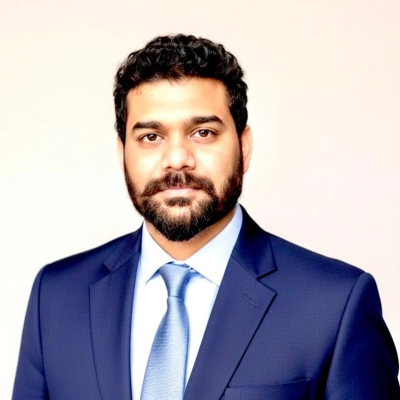
Lean AI-Native Teams Deliver Scalable Real Value
I’m Runbo Li, Co-founder & CEO at Magic Hour.
The trend I’m most excited about isn’t a new fund structure or ESG framework. It’s the collapse in cost of building something that actually matters. AI has made it possible to create real economic value, serve millions of people, and do it without burning through tens of millions in venture capital. That’s the most sustainable form of finance I can think of.
David and I built Magic Hour to millions of users as a two-person team. No 50-person engineering org. No massive burn rate. No pressure to chase growth at all costs just to justify a bloated cap table. We used AI to do the work of entire departments. That means every dollar of investment goes further, every unit of energy produces more output, and the business can be built with intention rather than desperation.
I think the old model of “raise $100M, hire 200 people, figure out product-market fit later” is one of the most wasteful systems ever created. It destroys capital, burns out talent, and produces companies that exist only to serve their own fundraising cycles. The real impact investment trend is backing lean, AI-native teams that can reach massive scale without massive waste.
I watched my parents run small businesses for years. They didn’t have access to expensive agencies or production teams. Magic Hour exists because we believe economic opportunity shouldn’t be gated by budget. That’s impact. Not a label on a fund deck, but actual access created for actual people.
The most sustainable company isn’t the one with the best ESG score. It’s the one that creates disproportionate value relative to the resources it consumes. AI makes that possible at a scale we’ve never seen before. That’s the trend worth paying attention to.

Transparency Empowers Values-Aligned Consumer And Investor Choices
The trend I’m watching most closely is the consumer backlash against ESG-driven investing, and the parallel rise of demand for transparency about where corporate dollars actually go. At Buy Woke Free, we operate a platform that researches and reviews over 2,400 brands across 620+ categories, scoring them on involvement in DEI programs, ESG reporting, and political activity. What excites me is that the same scrutiny investors are starting to apply to “sustainable finance” claims is exactly what everyday shoppers now want at checkout.
Here’s why it resonates: for years, ESG was sold as a one-size-fits-all virtue, and a lot of people felt they had no way to verify what was real versus what was marketing. We built our AI-powered rating system precisely because consumers deserve to see the receipts, not just a glossy sustainability report, but how a company spends, what it funds, and how its leadership behaves. The most important development in this space isn’t a new financial product; it’s that information asymmetry is collapsing. People are demanding to know the values behind their money, whether that money is invested or spent.
The way we approach it is the same way we’d advise any stakeholder weighing tradeoffs: research first, then communicate clearly. Before we publish guidance on a brand, we evaluate it across marketing, internal policies, political donations, and leadership behavior, then we let consumers decide what aligns with their own values. We don’t tell you what to believe; we hand you the facts and the alternatives.
So the trend I’d bet on is values-based capital allocation becoming a two-way street. Investors want authenticity, not labels. Consumers want the same. The platforms that win will be the ones that earn trust through transparency rather than slogans, and that’s the entire reason Buy Woke Free exists.

Healthspan Progress Promises Broad Socioeconomic Upside
I did not discover my path towards impact investing from the typical environmental, social and governance or climate perspective. For 24 years working with CuraDebt, the emphasis was on an entirely different focus—that of helping individuals handle financial challenges. However, after many years in this industry, I discovered that there were numerous correlations between financial distress and poor health.
Having sold the business, I turned my interest to longevity technologies using EverLife Capital as the vehicle. One thing that caught me off guard was the serious interest that both investors and scientists have taken in the actual science of aging. Not only dealing with conditions once they’ve occurred but actually slowing down the process.
That which interests me most is the aspect that centers on healthspan as opposed to lifespan. The gains associated with increasing the number of healthy and productive years are much greater than merely adding extra years of existence. With people having increased health throughout their lives, the implications are numerous, with reduced health care costs and more effective retirement planning among them.
Considering the approach taken by impact investors, there will be few sectors that have greater ramifications downstream than aging populations. The demographics of our world have already begun to transform economies. Any slight change to healthspan will have a ripple effect for countless people.
On the other hand, I am careful. This is preliminary science; biotechnology does not advance in a linear way. Many exciting approaches have proven themselves to be failures, and the difference between progress and investment is sometimes quite pronounced. My tendency remains to seek proof rather than storytelling.
The reason for the personal interest lies in the differences with the previous experiences. When working with CuraDebt, we were dealing with helping people once the financial problems got out of hand. With longevity science, on the other hand, the goal is to make sure that such issues do not arise to begin with.
To me, the most fascinating types of impact investments are those which positively influence human lives in a demonstrable manner. As long as longevity research keeps advancing, making individuals healthier and more alive might become the greatest socio-economic revolution of our time, transcending mere financial gains.

Verification Unlocks Resources For Credible Small Businesses
what excites me most is the shift toward funding businesses that can demonstrate real-world impact, even if they’re small and outside traditional financial networks.
a few years ago, most of the founders i met thought access to capital was mainly about having the best pitch deck. increasingly, i’m seeing funds ask a different question: can we verify who you are, what you’ve built, and whether the impact you’re claiming is actually happening?
that matters because some of the most promising projects don’t come from large corporations. they come from small businesses, local operators, and entrepreneurs in markets that have historically been overlooked. the challenge has never been a lack of ideas. it’s been a lack of trust infrastructure.
working in digital identity and authority building, i’ve seen how a stronger digital footprint, consistent business information, and third-party validation can change how investors view a company. opportunities that were previously out of reach suddenly become realistic because the business becomes easier to evaluate and trust.
for me, that’s one of the most important developments in sustainable finance. when better verification and transparency help capital reach credible smaller businesses, impact investing becomes more than a headline. it becomes something that can actually create change on the ground.

Geothermal Becomes Attainable Through Manufacturer Support
Not your typical “impact investing” guy here — I run a family HVAC and plumbing company on Utah’s Wasatch Front. But I’m watching sustainable finance reshape my industry from the ground up, and one trend genuinely excites me: renewable energy systems becoming accessible through manufacturer-backed financing programs.
The development I’m most fired up about is how geothermal heating and cooling is finally within reach for average homeowners. Bryant’s Evolution® geothermal system, combined with tax rebates and local utility programs, means a technology that used to be a luxury is now a realistic conversation at the kitchen table — not just a brochure fantasy.
What makes this “impact investing” in the truest sense is that the savings are real and immediate. Homeowners aren’t just making an environmental statement — they’re locking in long-term energy cost reductions while the rebate structures essentially subsidize the upfront risk.
The financing side is what seals it. Digital applications, decisions in seconds, zero-interest promotional windows — the barrier to entry for these bigger sustainable upgrades has collapsed. That’s where the real behavioral shift happens: when doing the right thing environmentally is also the financially obvious move.

Pension Funds Anchor Long-Horizon Purposeful Allocations
The trend I’m most excited about in impact investing is the growing participation of pension funds. These funds represent the long-term savings of millions of workers, and their involvement brings scale, stability, and credibility to sustainable finance. By channeling capital into housing, healthcare, and climate solutions, pension funds are aligning financial returns with social outcomes that directly benefit the people whose savings they manage.
This resonates with me because pension funds naturally operate with long horizons, which matches the timelines required for climate adaptation, infrastructure, and healthcare projects. Their participation signals that impact investing is no longer niche; it’s becoming mainstream. For example, Japan’s Government Pension Investment Fund recently pivoted into impact investing, and similar moves are happening across Europe and North America.
The measurable impact is significant: even small allocations from pension funds can mobilize billions toward sustainable projects. This not only accelerates progress on climate and social goals but also strengthens trust in the sector by showing that institutional investors see impact as financially viable.
The lesson: impact investing’s future lies in institutional adoption paired with rigorous impact measurement. Pension funds are proving that sustainable finance can deliver both returns and resilience, making them a cornerstone of the next phase of impact investing.

Modular Clean Energy Enables Safer Phased Expansion
I find it most encouraging that there has been an unprecedented rate of investment in modular clean technology — including scalable solar PV system configurations and modular energy storage systems. Because this technology lowers the cost barrier for companies looking to upgrade or install new clean energy equipment, impact investors have backed this area heavily.
As someone who maintains that incremental expansion of facility operations is a far better financial strategy than investing large sums of money in high-risk projects, I believe that modular upgrades provide a much safer way to expand. By using these phased systems, a company can increase its ability to produce clean energy as the organization grows, which aligns perfectly with operational requirements. This practical application of sustainable financing allows chief executive officers to upgrade their utility infrastructure without incurring significant debt while simultaneously managing energy consumption and maintaining strong control over the corporate balance sheet.

Use-Of-Proceeds Bonds Provide Clarity And Stability
The key movement in my view is that the green bond market has shifted from complicated target-linked debt products to easy-to-understand use-of-proceeds green bonds. Green bonds maintain consistent volumes since they are an easier way to know where your money goes. This shift feels relevant to me because being able to easily track capital and produce a predictable yield along with having the ability to audit your funds is essential when trying to keep a company’s financial statements clean and create a stable model of cash flows.
Sustainability-linked loans may also have a risk of introducing some regulatory and KPI volatility; whereas green bonds provide a simple way to fund one cost-saving project such as high-efficiency HVAC upgrades and smart building monitors. A clearer structure in sustainable finance will allow companies to obtain funding for their efficient infrastructure projects without taking on the additional compliance risk or potential financial penalty.

Prevention-Focused Finance Reduces Risk And Cost
One development I find especially encouraging is the growing focus on resilience and prevention within sustainable finance. In my industry, I see the financial and environmental cost of property damage every day, so I appreciate investments that help communities reduce risk before disasters occur. Projects that improve building resilience, water management, and infrastructure can create both long-term economic value and measurable social benefits. What resonates with me is that these investments are designed to solve real-world problems rather than simply react to them later. At PuroClean, prevention is often far less costly than recovery, and I believe the same principle applies to sustainable finance. The most exciting opportunities are the ones that align positive impact with practical business outcomes and stronger communities.

Ground Truth Data Drives Better Project Decisions
Impact investing and sustainable finance aren’t my arena, but here’s where they intersect with what we do every day at Southpoint Texas Surveying: capital is increasingly chasing projects that can prove their environmental and physical footprint. And that proof starts on the ground.
When a lender, builder, or investor wants to back a sustainable development, the first question is always the same, what does this land actually look like, and what can it support? That’s where surveying becomes the quiet foundation of responsible finance. Before a dollar moves toward green infrastructure, solar acreage, or low-impact construction, somebody has to map the boundaries, the topography, and the drainage. Our topographic and boundary surveys give those decision-makers hard data instead of assumptions.
The trend I’d point any investor toward is the rising demand for verifiable, location-specific information. Sustainable finance lives or dies on accuracy and accountability, and that’s exactly how we approach every project here in Harlingen, Brownsville, and across South Texas. Founded by Michael Wood, an RPLS licensed in both Texas and Florida, our firm pairs modern GPS technology with conventional methods precisely because good decisions require trustworthy measurement.
The way I see it, the most exciting development is that finance is finally rewarding due diligence on the physical world, not just the spreadsheet. When investors insist on knowing the real condition of a parcel before funding it, they’re making smarter, more durable commitments.
So my advice to anyone in this space: respect the ground truth. The numbers in your model only mean something if they’re anchored to an accurate picture of the land itself. At Southpoint Texas Surveying, southpointsurvey.com, that’s the trust we help build, one survey at a time.

Metals Power The Renewable And Tech Revolutions
As someone who comes from the precious metals industry, one of the trends that excites me the most relates to how metals such as silver and PGMs are now being recognized as the pillars of renewable energy and artificial intelligence revolutions. We’re seeing an enormous shift in which impact investment capital is not being invested in software and windmills but rather in the physical supply chains that will enable their creation. Silver, for example, has recently been declared a critical metal due to its extensive use in solar panels and semiconductors. It is exciting to see how this trend fits into our context because this means that we are not merely an inflation hedge, but rather the backbone behind the entire green revolution.