

Fast execution matters at entry. But the harder question for a foreign-exchange trader is what happens in the seconds after the fill, when the position is open, the market is still moving, and the platform either holds up or quietly passes the risk back. BtcDana, a multi-asset CFD platform, competes on fast execution, but for a currency trader, the more revealing measure is what the surrounding infrastructure does once that execution is done.
A trade that is easy to open can still be expensive to hold and dangerous to exit. Whether a position stays manageable depends on the cost the trader is locked into, the floor under a bad move, and the tools that stay usable when conditions turn. Those are infrastructure questions, and they decide how a platform behaves during a central-bank decision or an inflation release far more than entry speed alone.
What the Trade Costs
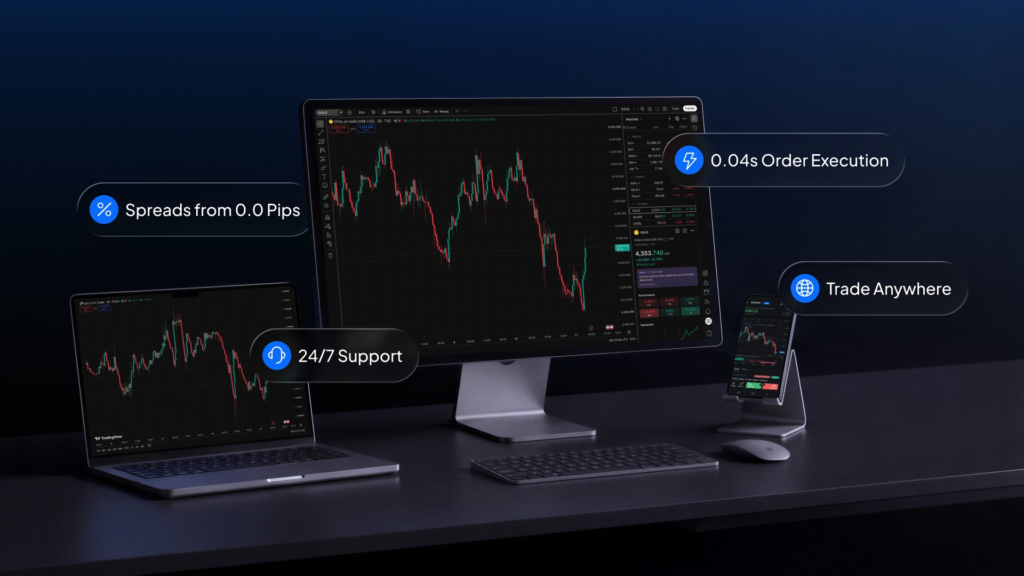
Cost is a part of a trade that a trader carries from open to close, so it belongs at the front of any infrastructure discussion. BtcDana lists spreads from 0.0 pips and more than 300 symbols, with execution times at 0.04 seconds. For an FX trader, the headline figure is the entry; the spread and any commission are what the position pays every time it is opened, adjusted, or closed.
That distinction matters most on the pairs a trader touches often. A EUR/USD position sized for a scheduled release is only as good as the round-trip cost of holding and exiting it, and the cost on any venue can move when liquidity thins. Naming the spread and symbol coverage up front lets a trader model what a trade actually costs rather than discover it mid-session, which is the difference between a cost structure a trader can plan around and one that surprises them.
What Holds When Prices Gap
The harder test is a gap. When a currency pair jumps on an unexpected result, the danger is not only the direction but the size of the move against an open, leveraged position. BtcDana offers leverage up to 1:500 from 0.01 lots, and that figure cuts both ways: it enlarges gains and losses alike, and CFD trading carries a real risk that losses exceed a trader’s initial deposit.
This is where the platform’s protective design earns its place. BtcDana provides negative balance protection, a mechanism designed to prevent an account balance from falling below zero, adding an account-level safeguard during extreme market movements. It does not remove market risk or guarantee stop-loss execution at a specified price, but it provides an additional layer of protection when volatility becomes unusually severe.
The Parts You Only Notice Under Pressure
Beyond cost and risk controls sit the components that decide whether a trader can act at all mid-session. BtcDana provides access to MetaTrader 5 across iOS, Android, Windows, and macOS, allowing traders to monitor markets, manage positions, and access core trading tools across devices. More than 300 CFD instruments across forex, metals, indices, stocks, and crypto let a trader check how a dollar move is landing elsewhere before adjusting a currency position.
Infrastructure also extends beyond the trading interface. BtcDana provides 24/7 customer support for account and platform-related assistance, while information on the entities and regulatory frameworks applicable to its services is available through its official channels. Together, these elements give traders greater visibility into both the support available to them and the framework behind the trading experience.
“Execution speed is only one part of the trading experience. What matters just as much is giving traders the tools, access, and safeguards they need to manage a position once it is open,” said Peter Chow, founder of BtcDana.
For FX traders, the point is that a platform is judged not only at the fill, but in what comes after it. Transparent trading costs, account-level safeguards for extreme market conditions, cross-device access and responsive support all shape a trader’s ability to manage a position once the market starts to move. For BtcDana, that broader infrastructure is an important part of the trading experience it aims to provide.