

Saudi Arabia wants USD 100 billion in foreign direct investment every year by 2030. It is an audacious target, and the Kingdom has made genuine progress – reforms, incentives, and an open-door posture that has drawn capital from every major financial centre. But scratch beneath the headline numbers and a more complicated picture emerges. Foreign investors still face localization requirements, national hiring quotas, and multi-agency registration processes that can turn a promising mandate into months of circular bureaucracy. The capital is willing. The execution is where things break down.
In this region, capital doesn’t fail. Misalignment does.
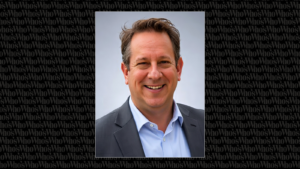
That tension is precisely the business opportunity that Omar Jamal Al-Omar identified years before Saudi Arabia became the world’s most-watched emerging market. As Chairman of OJO Group and founder of its advisory arm, ARC Advisory, Al-Omar has now anchored the platform within the Kingdom – deepening a regional presence already established across the GCC.
He Learned This Business in the Room, Not the Classroom
Al-Omar’s instincts for Gulf markets were formed early. He grew up in Kuwait accompanying his father to negotiations, watching how deals were structured and how trust was built with institutional stakeholders. That kind of education does not show up on a résumé, but in a region where relationships determine outcomes, it counts for more than most credentials.
By his mid-twenties, he had visited nearly 40 countries and built a network that spanned industries and continents. After studying International Business and Economics at Richmond American University in London, he returned to Kuwait and took the helm of strategic development at Al-Omar Center for General Trading and Contracting. Under his watch, the firm participated in tenders and project contracts worth more than USD 6 billion – the kind of work that puts you in rooms with government ministries and sovereign decision-makers on a regular basis.
Those rooms exposed the gap ARC was built to solve. Multinational corporations would arrive in the Gulf technically capable and financially well-resourced, then spend months – sometimes years – going nowhere. The problem was rarely the deal itself. It was the absence of the relationships, cultural fluency, and sovereign-level access that actually move things forward in this part of the world.
Built for Access and Execution, Not Reports
ARC Advisory was never designed to produce strategy papers. It was built as a high-touch strategic platform that works directly — and on a highly selective basis — with sovereign wealth funds, royal family offices, ministries, and institutional investors — helping international capital find its footing within regional governance systems and see mandates through to close.
The numbers that have accumulated since reflect that approach: more than USD 10 billion in facilitated transactions, roughly USD 3 billion in capital raised, and over USD 1 billion in asset preservation mandates. The platform’s scope extends across government-linked initiatives, cross-border capital structures, and long-cycle strategic mandates that rarely surface in public market activity. In 2024, the firm supported more than ten sovereign-level introductions and helped activate over fifteen international companies across GCC markets.
The Saudi expansion anchors around a new partnership with Sarat Investment Holdings, a boutique firm managing more than USD 20 billion in assets across healthcare, hospitality, and sovereign fund services. The two firms have already built a joint pipeline exceeding USD 350 million in projects targeted for maturity by 2026.
The Bigger Picture
Saudi megaprojects require not only capital but the enabling infrastructure and execution capability to deliver long-term returns – and the Kingdom has already seen what happens when that piece is missing. Delays, revised timelines, and scaled-back ambitions have been a recurring feature of Vision 2030’s more complex initiatives.
What the market needs, and what Al-Omar has spent his career building, is the capacity to bridge global investment intent with the institutional realities on the ground. That is a harder thing to manufacture than a term sheet – the firms that get it right don’t just close deals. They define how capital moves in the region.